
What is Abrosexuality?
Exploring the Spectrum & Fluidity of Sexuality — Real Talk Highlights + Join Us for the May Pleasure Pros Meet-Up AND our New Book Club!

For many people, sexuality and sexual attraction do not feel fixed or constant but rather are dynamic and ever-changing. Here at Erotic Expressions, we celebrate the fluidity and spectrum of gender, sexuality, and attraction, and support clients in exploring and embracing labels (or rejecting them) that resonate, or don’t resonate, with their lived experience. Oh, and— we also love a vocabulary lesson (for those of you who don’t know, I am a former English teacher of 13 years).
Have you heard the term abrosexuality?
The word abrosexual itself comes from the Greek root ‘habros’, used as a prefix abro- which means “delicate” or “graceful.” This refers to the movement and changing nature of those who are abrosexual. It is unknown who coined the term, but the term itself first started being used around 2013 on the website DeviantArt, becoming popularized on Tumblr.
Abrosexuality refers to a sexual orientation that is fluid and changeable over time. Someone who is abrosexual may experience shifts in their sexual attraction, perhaps identifying as lesbian at one point, asexual at another, or experiencing entirely different patterns of attraction altogether. These changes can occur over hours, weeks, or months, and the timeline is unique to each individual.
Abrosexuality is a valid identity within the LGBTQIA2S+ community and beyond. It reflects an important truth: sexuality is not always static.
An abrosexual person might experience:
Attraction to different genders at different times
Periods of strong, minimal, or no sexual attraction
A fluid or evolving relationship with identity labels
Abrosexuality is sometimes confused with asexuality, but they are distinct. Asexuality is a sexual orientation characterized by little or no sexual attraction to others, though experiences vary widely among individuals. In contrast, an abrosexual person may move in and out of experiencing sexual attraction, including periods that feel asexual.
Because identity is deeply personal, some people who are abrosexual may choose different language to describe themselves, such as “fluid” or “multisexual,” while others may choose no label at all. It’s also important to remember that sexual orientation doesn’t necessarily align with romantic orientation or gender identity and expression, and to always respect the way others self-identify, though abrosexuality has an abroromantic counterpart.
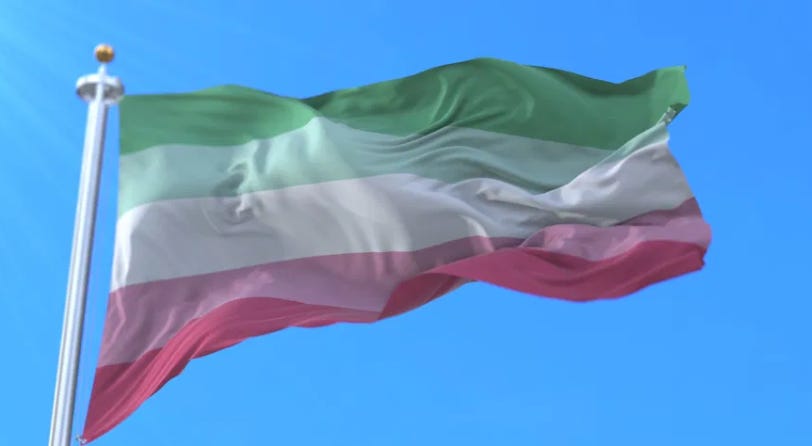
The abrosexual flag was most likely created by Mod Chard on Deviantart in 2015.
The abrosexual flag is made up of five colors. While the meaning of the colors is unknown, it has been suggested that green symbolizes queer attraction, the fade to white symbolizes the in between stage of someone’s attraction beginning to change, and the pink represents the change itself. Also, the colors match that of watermelon, which could be a fun pun reflecting the fluidity of abrosexuality. Abrosexual Awareness Day happens every year on the 2nd of July, falling exactly halfway through the year, signifying the day that the year moves from one half to the next, also symbolizing the shifts in an abrosexual person’s identity.
Like many evolving identities, it is sometimes misunderstood. A common misconception is that abrosexual people are “confused” or unsure of who they are. This is both harmful and inaccurate. Fluidity is not confusion. It’s a valid way of experiencing identity and sexuality. A person’s sexuality and/or labels can definitely shift and change over time, and don’t have to stay fixed throughout a person’s life. They may change for a variety of reasons, whether born out of the process of self-discovery, different experiences that change feelings of attraction or that change in response to environment, or learning about new labels that one can feel more connected to than labels they’re currently using or not using.
Exploring identity can be a deeply personal and sometimes vulnerable process. However, when we challenge rigid narratives that prioritize fixed labels or binaries, we create space for authenticity instead of shame. We have the agency to explore, self-define, and it’s important to remember that no one gets to say who you are or what labels you can use.
Abrosexuality is just one of many ways to experience sexuality. You are allowed to explore labels without pressure, to try them on, to outgrow them, or to reject them entirely.
Coaching can offer a supportive space to unpack internalized stigma, deepen self-understanding, and navigate identity and relationships with more ease and compassion.
I invite you to reach and schedule a complimentary discovery call if you’re curious about how relationship and intimacy coaching might benefit you.
Real Talk With the Sexperts Got Clinical—and Spicy 🌶️—and the REPLAY is LIVE!👀

Tune into the REPLAY from last night’s Live Q&A panel where sex educators answered your questions on anatomy, arousal, libido, pelvic health, and sexual wellness—clearly, honestly, and with a dose of humor.
We covered what’s often left unsaid: pain during sex, difficulty reaching orgasm, body connection, plus the practical side—lube, toys, and exploring both sexual and non-sexual pleasure.
Stay tuned for more details about next month’s panel, “Staying or Leaving.”
PLUS! Real Talk With the Sexperts turns 1 years old next month—— we WILL be celebrating! Stay tuned for more details! 👀🎂🎈🎁
Pleasure Professionals! Will you join me for the May Meet Up?🌹

The Pleasure Pros Virtual meet up is a space for pleasure-positive professionals—therapists, coaches, educators, and wellness providers—to connect, collaborate, and be themselves—to check in with what’s working in your practice or business, talk through challenges or pain points, brainstorm ideas or collaborations celebrate wins (big or small) or just listen and be in community.
Whether you come every month or occasionally, this space is here to support you in doing this work in a way that feels sustainable and connected. It can be a space where we support each other and hold one another accountable.
Our first meeting was a success! So, we’re keeping the momentum going!
Next month, we’re discussing visibility, expression, and marketing strategies. Topics for reflection and discussion will include:
1. Defining/Clarifying Audience and Niche
2. Selling Without Pressure
3. 30 Small Business Marketing Strategies
And of course, anything else that comes up for you along the way.
A reminder this is not a training. This is a casual, come as you are, lightly facilitated space for reflection, sharing, and exchanging ideas in an informal manner.
I would love to see you there! Feel free to reach out with any questions you may have!
This offering is now donation based to support greater accessibility. Pay what you can, or nothing at all. REGISTER THROUGH ZOOM!
Thursday, May 14
6-7 pm EST
📚 Book Club Announcement: Let’s Get into Some Nasty Work 📚
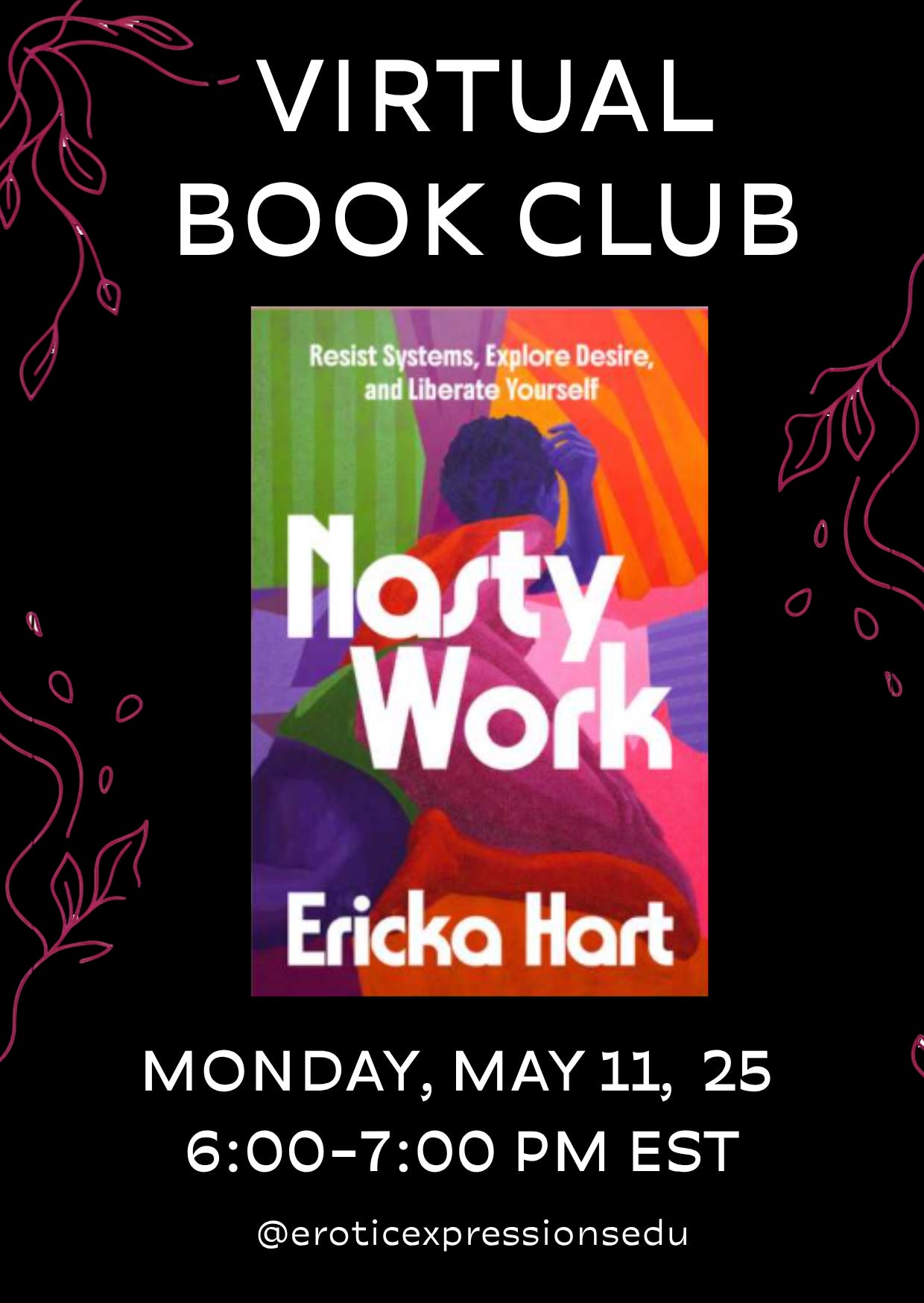
We’re diving into Nasty Work by Ericka Hart — and this is your invitation to join us.
This is a space for real conversation, reflection, and unlearning. Expect nuance, honesty, and the kind of dialogue that stretches you (in the best way).
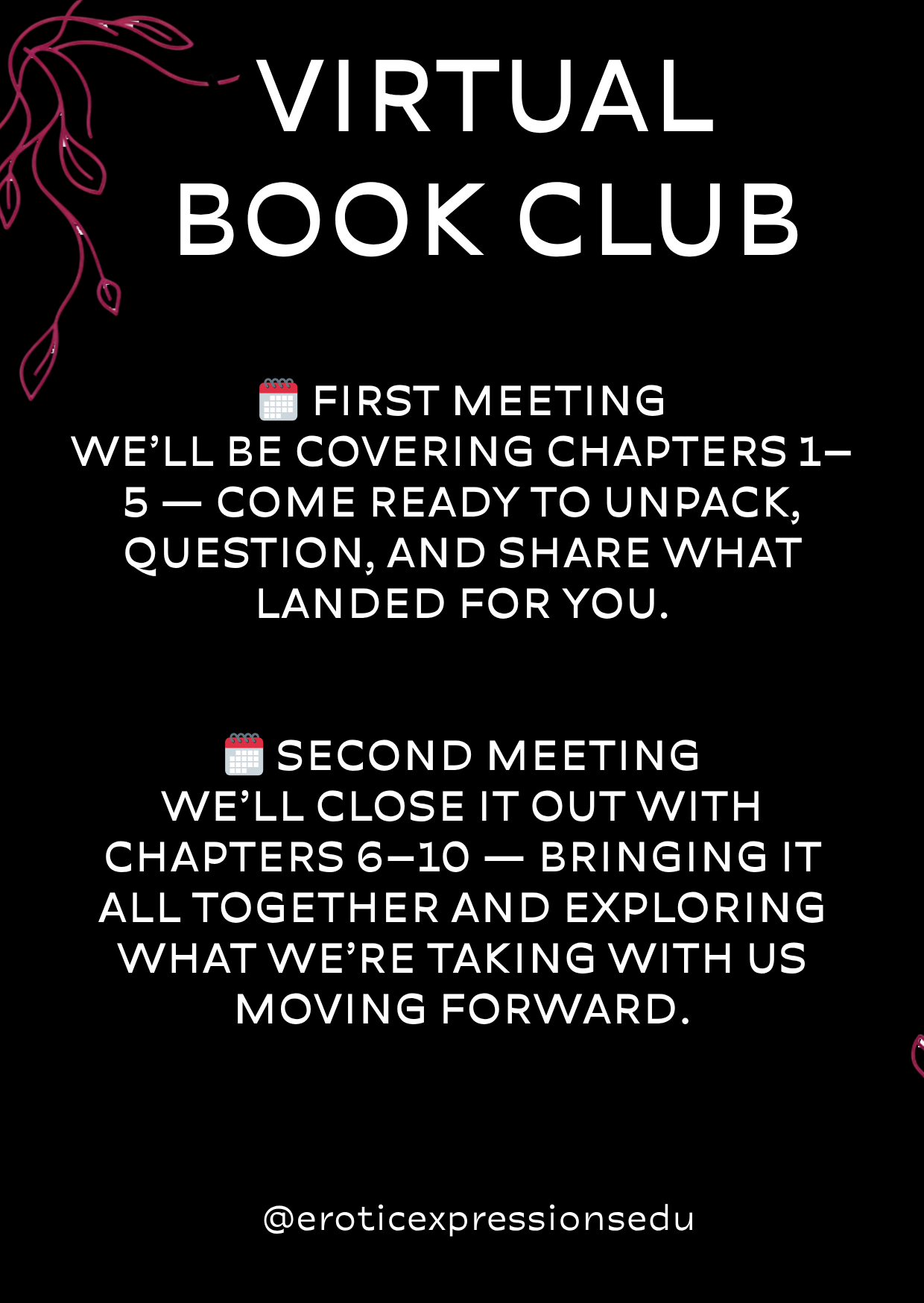
🗓️ First Meeting
We’ll be covering Chapters 1–5 — come ready to unpack, question, and share what landed for you.
🗓️ Second Meeting
We’ll close it out with Chapters 6–10 — bringing it all together and exploring what we’re taking with us moving forward.
This space is for folks who are curious, open, and ready to engage with topics around race, sex, power, and care in a deeper way.
💭 You don’t need to have all the answers — just a willingness to be in the conversation.
Bring your thoughts. Bring your questions. Bring your whole self.
As Abrosex (Hypersex/Apothisex),
Ambiamourous (currently Polyamourous),
Pansex,
And many other labels,
Navigating the abroromancy of my partners, within a Fluid Queer Relationship Anarchy Constellation/Chosen Family,
I experience abrosexuality as extremely quick shifts (within minutes/hours) between the different states, that can last for very long (from days to weeks to months to years).
Identify the triggers is still a journey I am on, but so far (after 30 years of observation), there is only 2 commonalities to the triggers :
it is internal, it comes from within me. It is not external stimuli that makes me shift.
it is involontary, no intentional inner work is making the shift happen, either way.
😘